Tenably
A tenant-focused app that equips renters with tools and guidance to confidently navigate renting in NYC.
Duration
3 months
Role
Product Designer
The Problem
Renting an apartment in New York City is notorious for being riddled with uncertainty, high stakes, and a lack of transparency. The anxiety of navigating housing issues often lead tenants to delay action and accept unfavorable conditions. I saw an opportunity to empower renters with accessible knowledge and practical tools to confidently address issues, document concerns, and take informed action so they can advocate for themselves and make better decisions for how they live.
The Solution
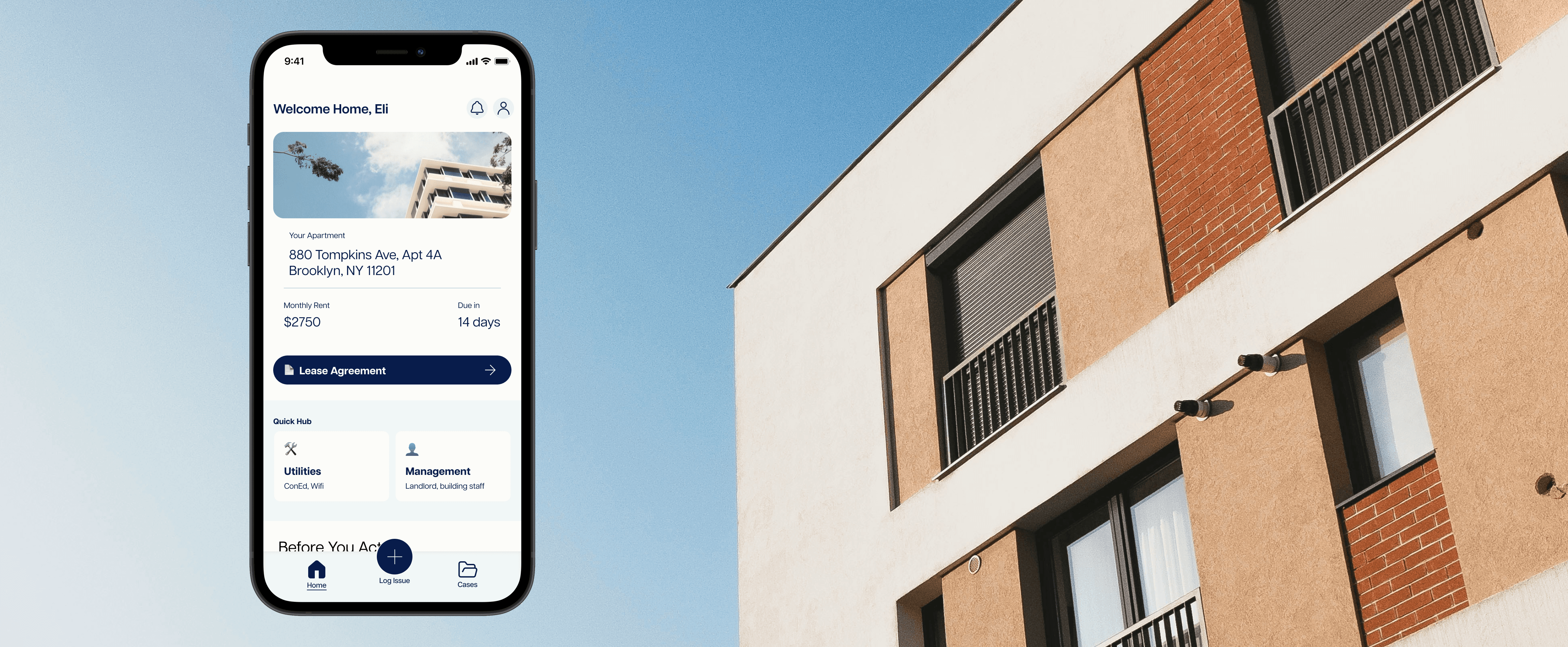
Tenant Helper is a mobile app that empowers NYC renters to understand their rights, resolve issues, and improve their living situations.
View Prototype

01. Discovery, Research & Insights
I began with a competitive audit of three housing-related tools to understand the landscape and identify gaps. While these platforms provided general housing information, none were renter-focused or personalized, and most required desktop access. From this analysis, three key insights emerged:
Preventative, personalized education is missing across competitors.
Most tools focus on reactive problem-solving rather than helping renters anticipate issues.
Trustworthiness is essential in a high-stakes domain.
Because housing decisions carry legal and financial consequences, information must be clearly sourced, legally vetted, and easy to verify.
Renting is emotional, not just transactional. Current tools overlook the human experience.
Combining clear guidance with relatable renter stories can help users feel supported and confident advocating for themselves.
These insights informed both the platform choice and product direction, shaping a solution centered on accessibility, credibility, and emotional engagement.
02. Problem Definition
Using these insights as a foundation, I scoped the MVP around reducing uncertainty at the exact moment renters are deciding whether to act. I mapped out common, real-life scenarios that NYC renters face.
Persona
Nathan
Independent NYC renter (mid-20s to 30s) who manages their own apartment but lacks confidence navigating housing issues.
Real-life scenarios
“There is a leak in my ceiling and my landlord is slow to respond.”
“My landlord gave me a rent increase and I don’t know if it’s legal or fair.”
“I want to track all my communication about the apartment in one place.”
User Needs
Clarity
Understand what's happening and what's normal
Action
Know what to say and how to say it
Tracking
Keep records and follow up confidently
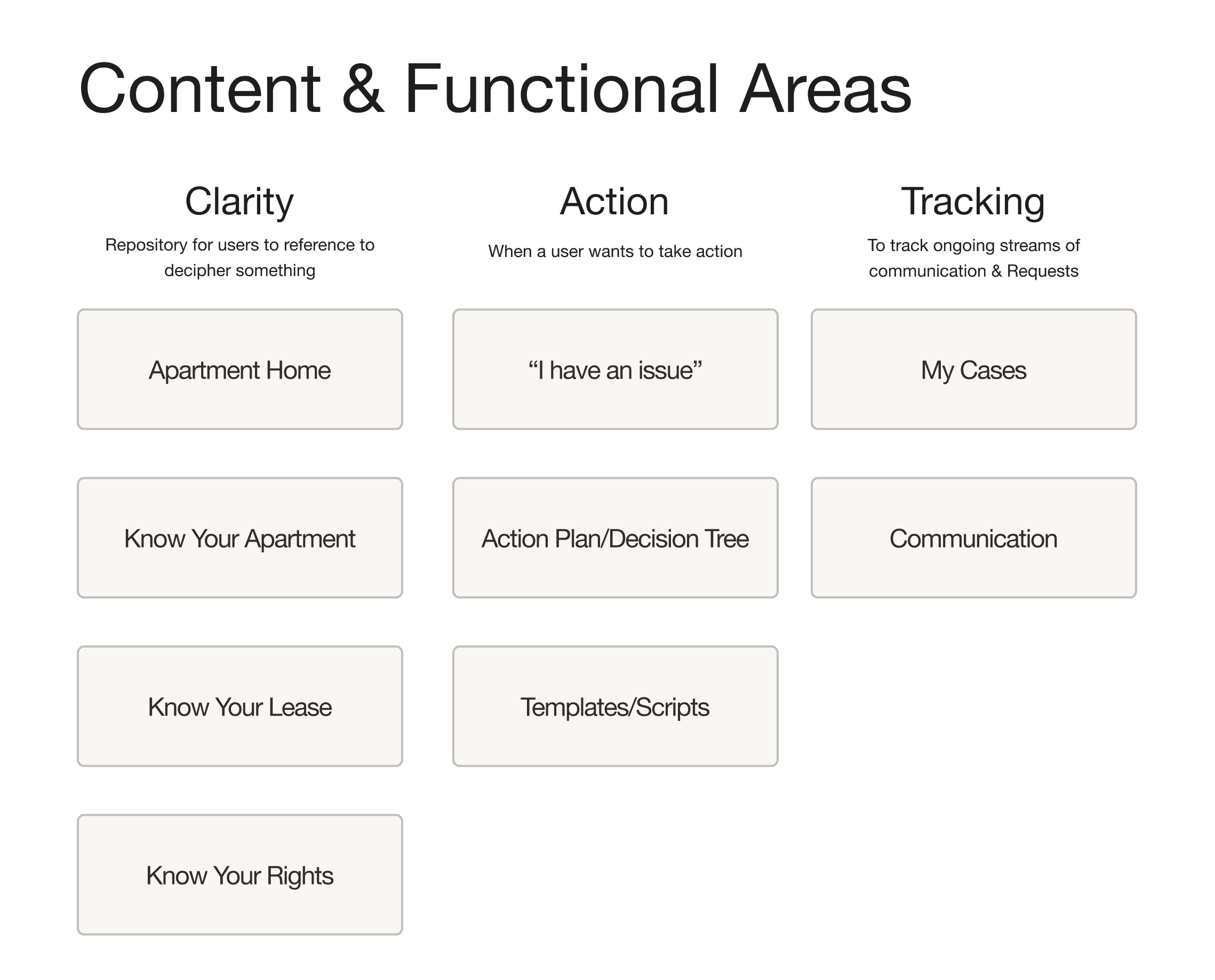
This framework translated renter uncertainty into clear product priorities, guiding the MVP towards clarity, action and accountability.
03. Design Process
Information Architecture
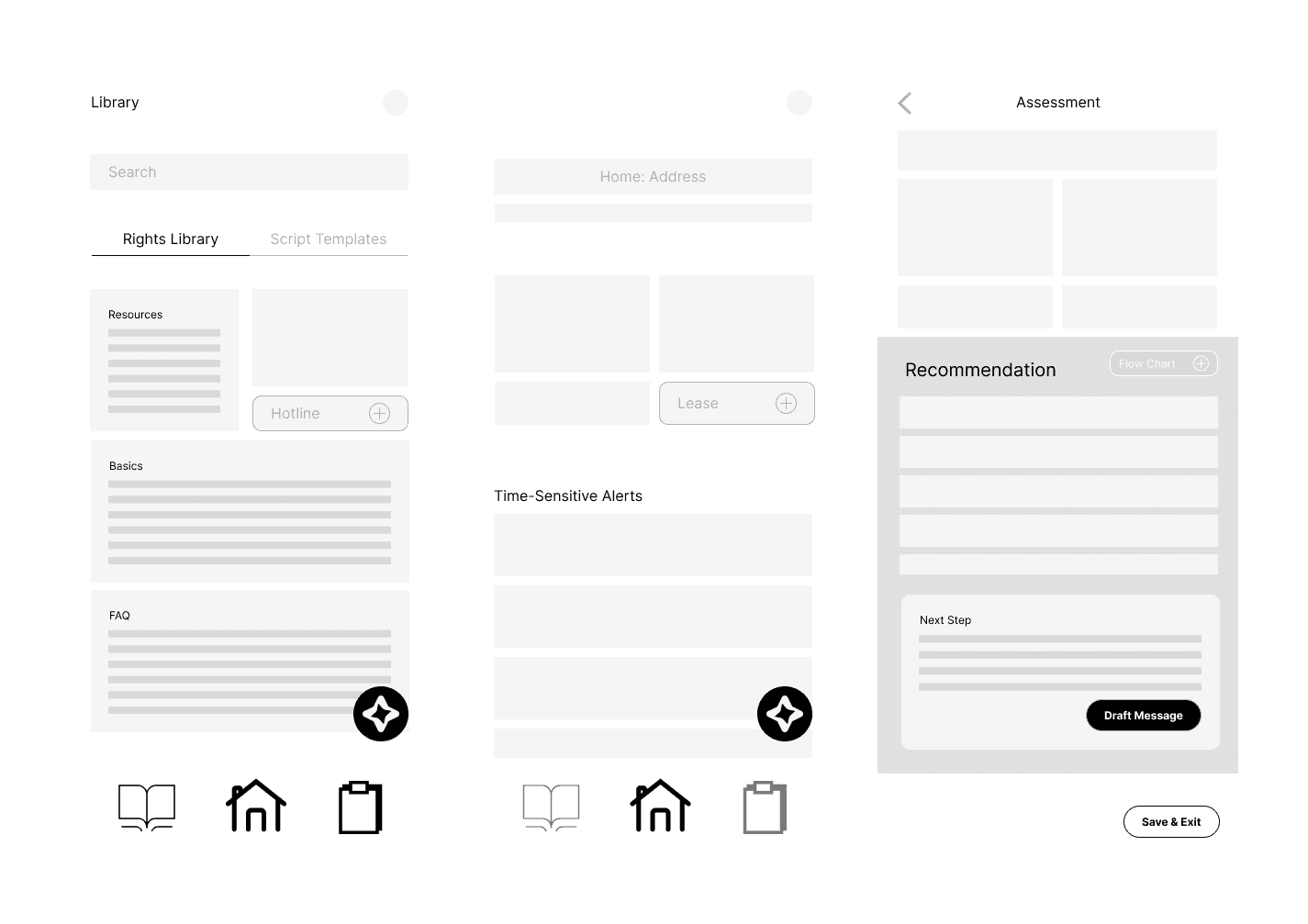
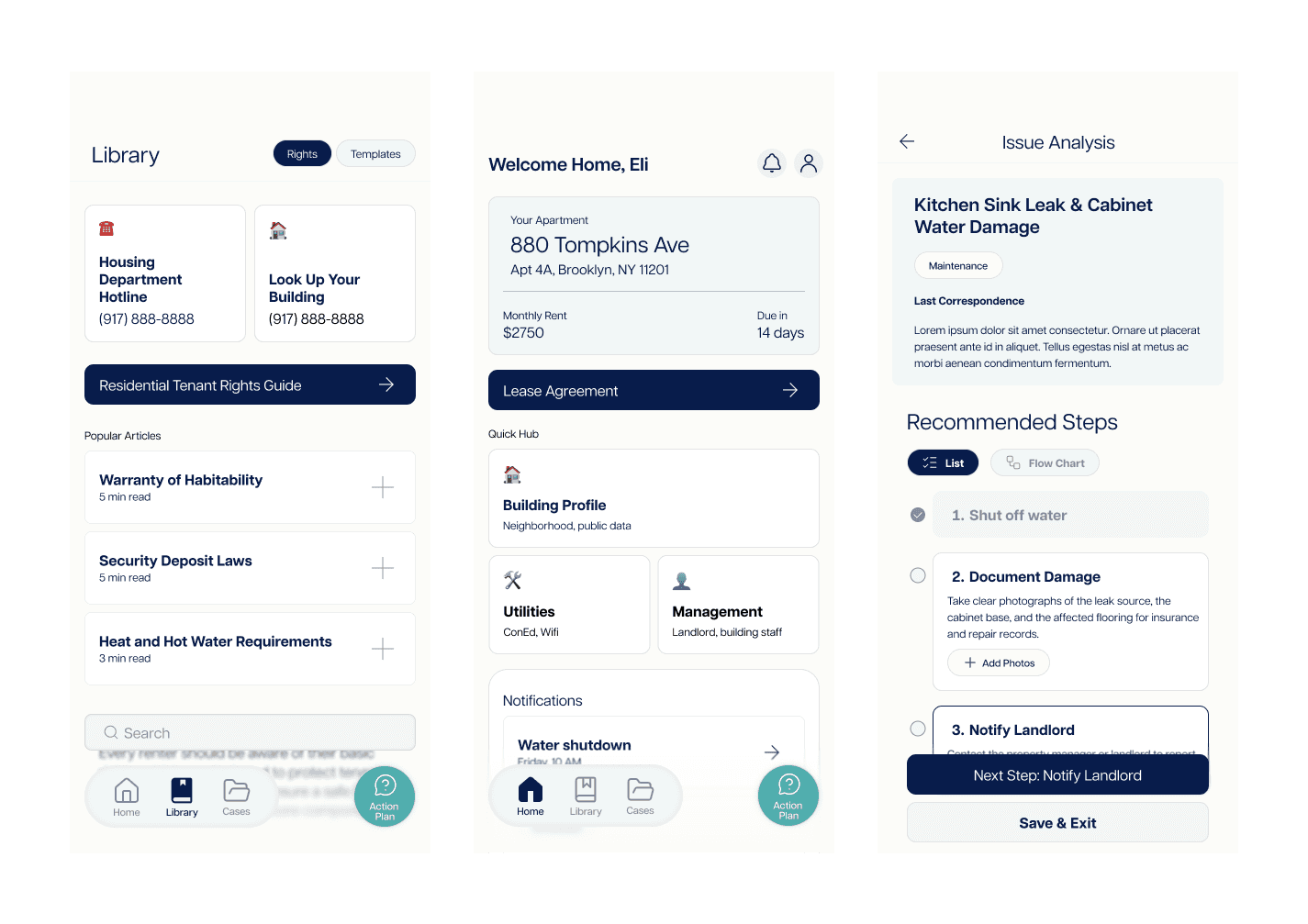
I designed the experience around three core renter workflows – assessing an issue, onboarding, and tracking follow-ups – to ensure the product supports real decision-making moments.
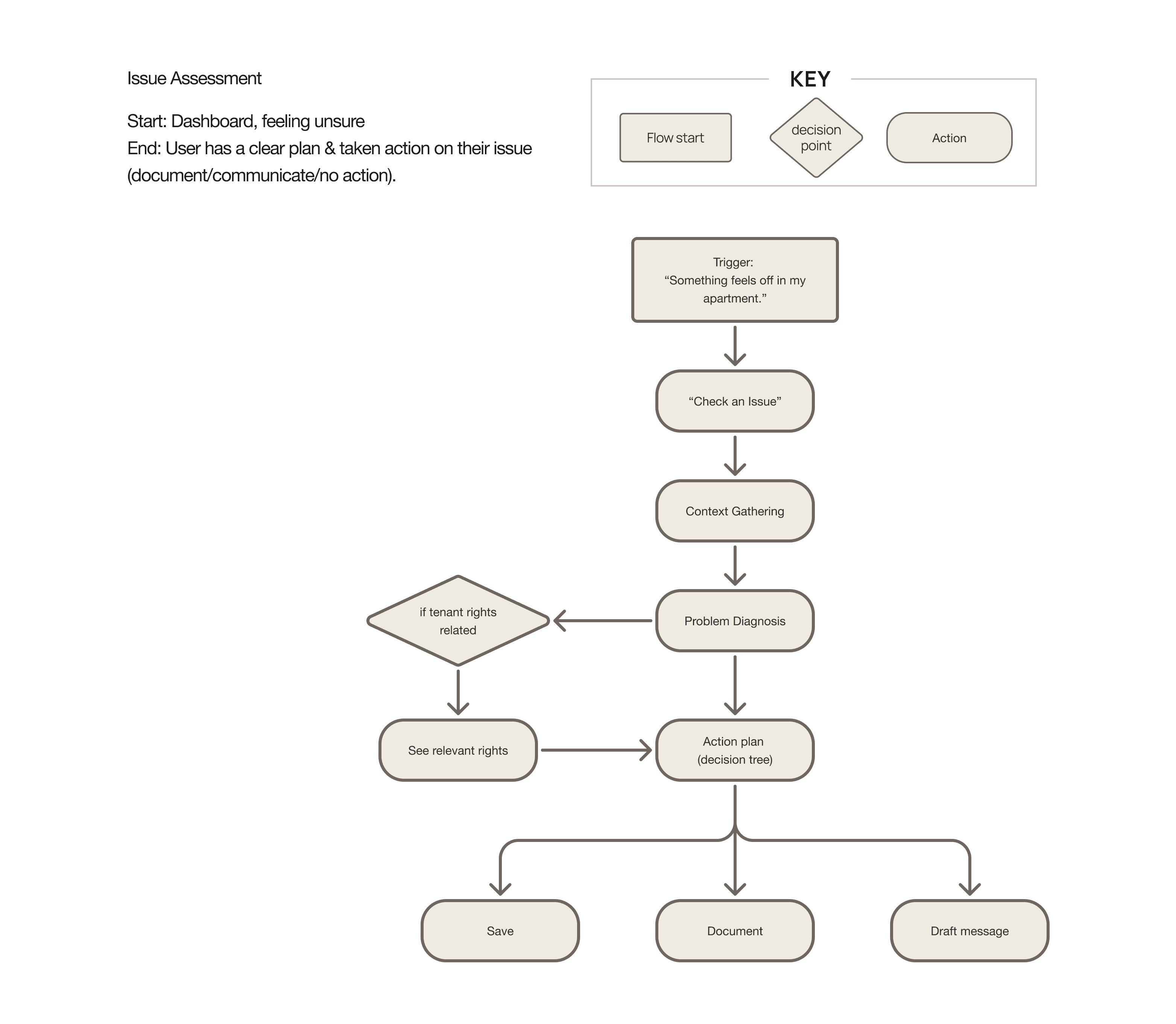
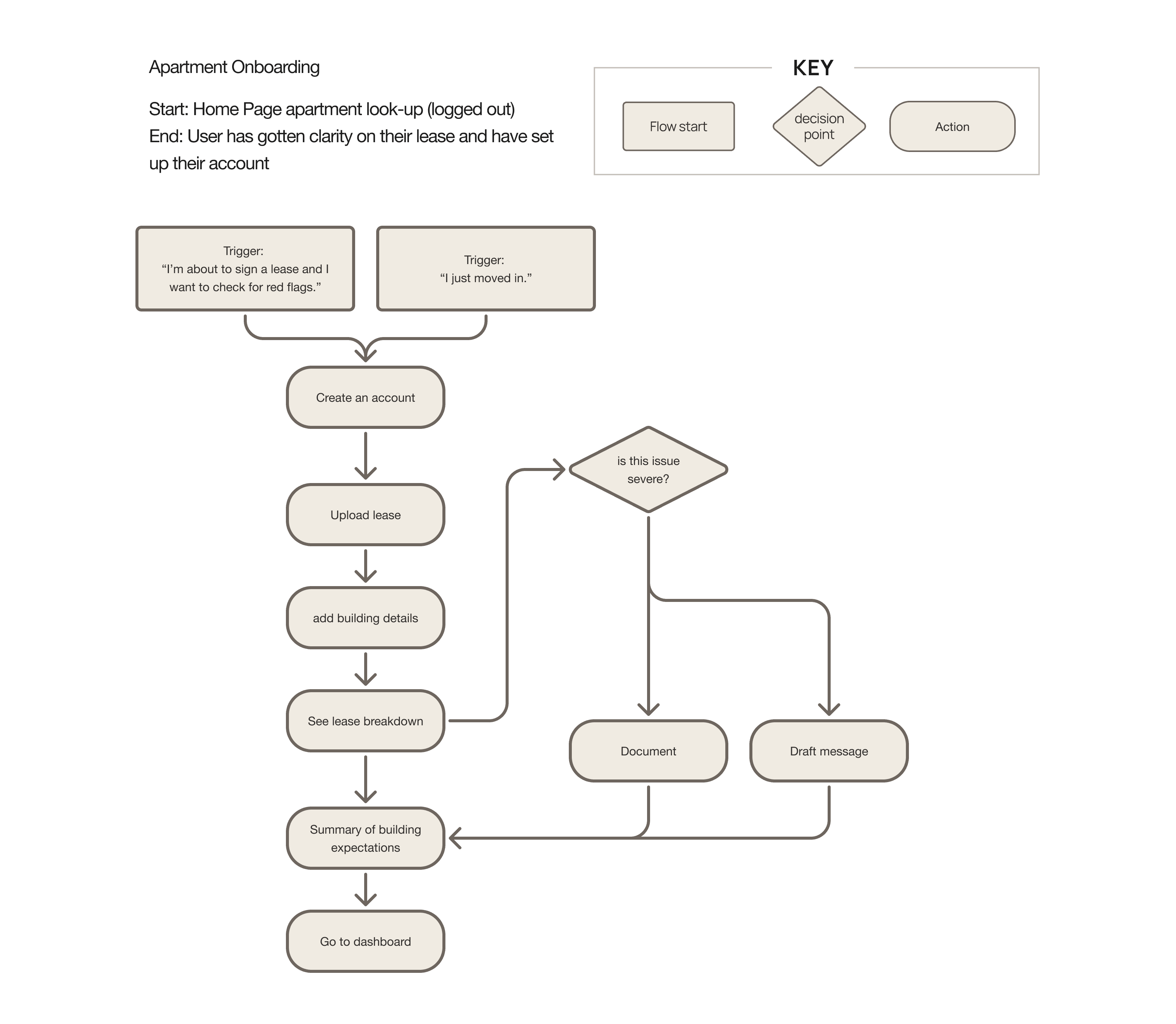
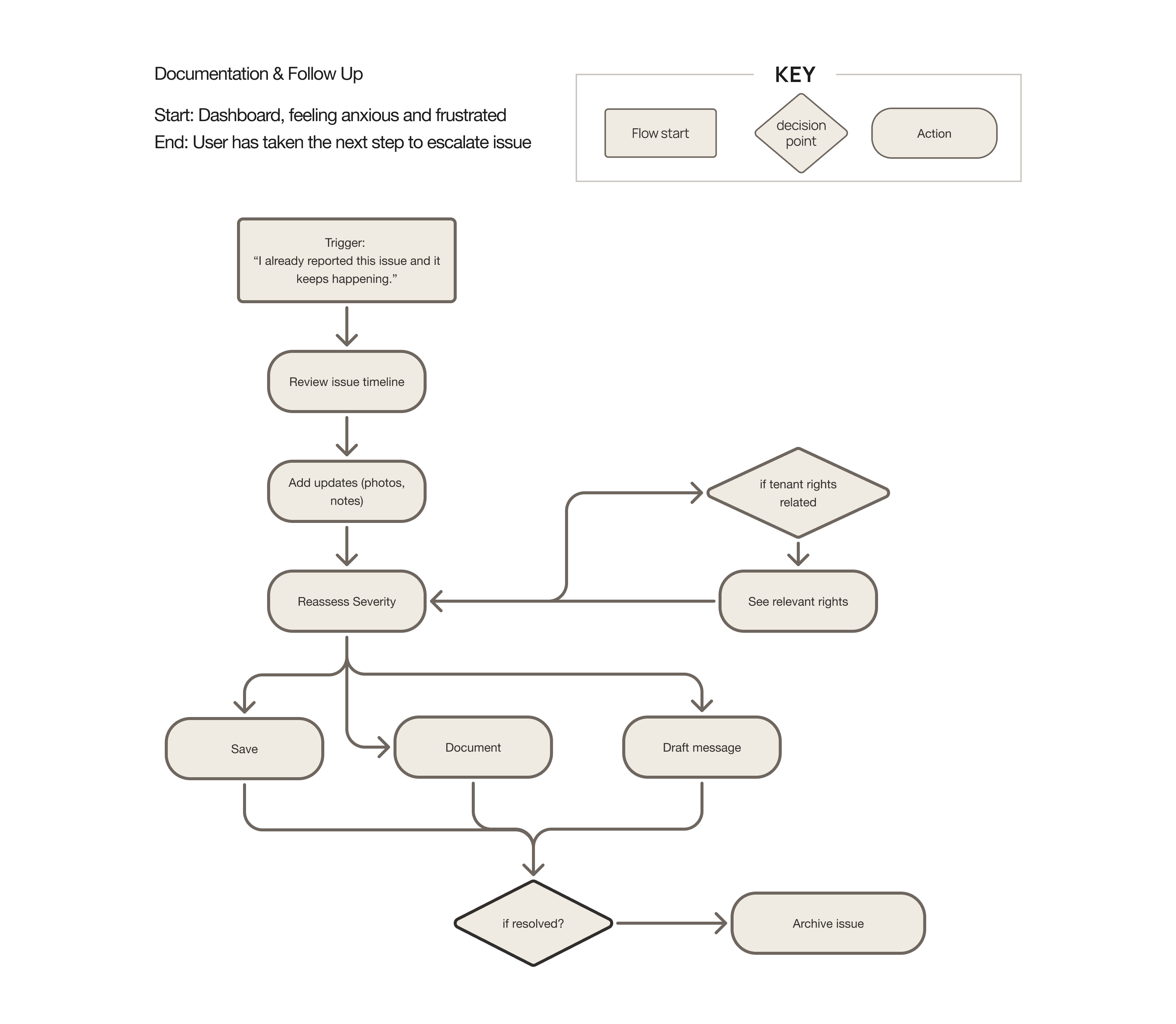
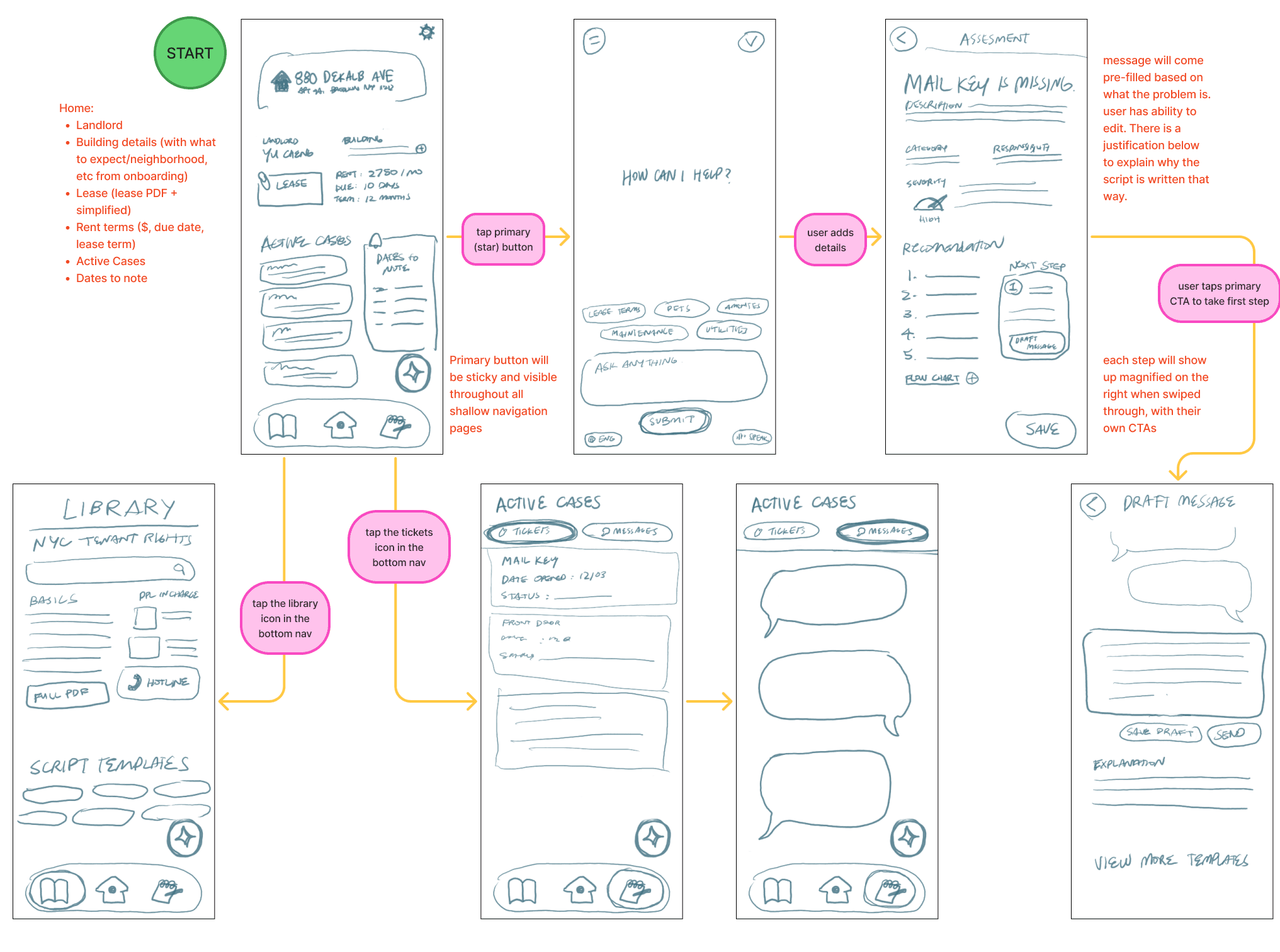
This process helped me identify any key screens that the user would need to complete the core user flows. I sketched layouts to prioritize issue assessment, onboarding, and documentation of events.
04. Visual Design
Moodboard
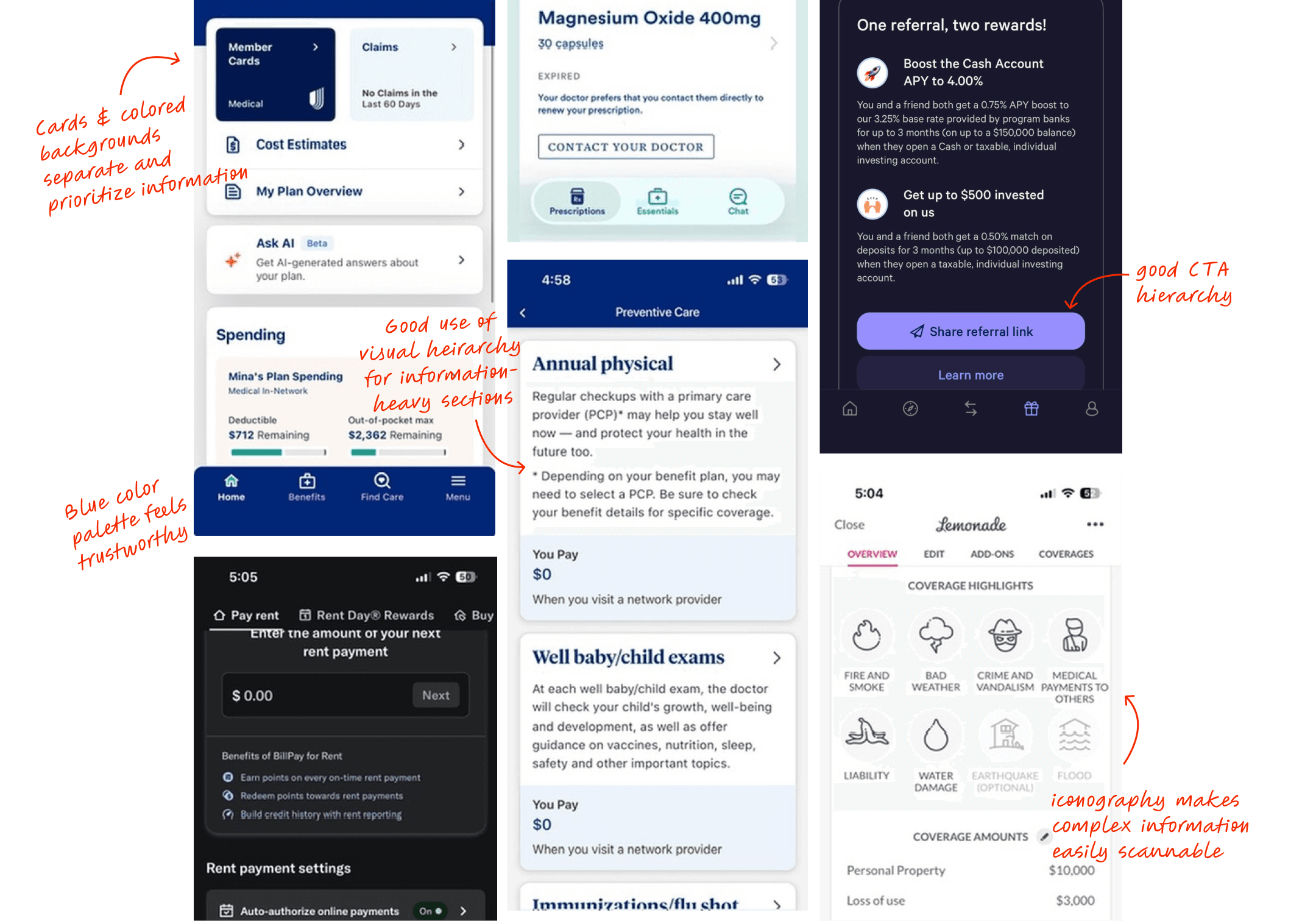
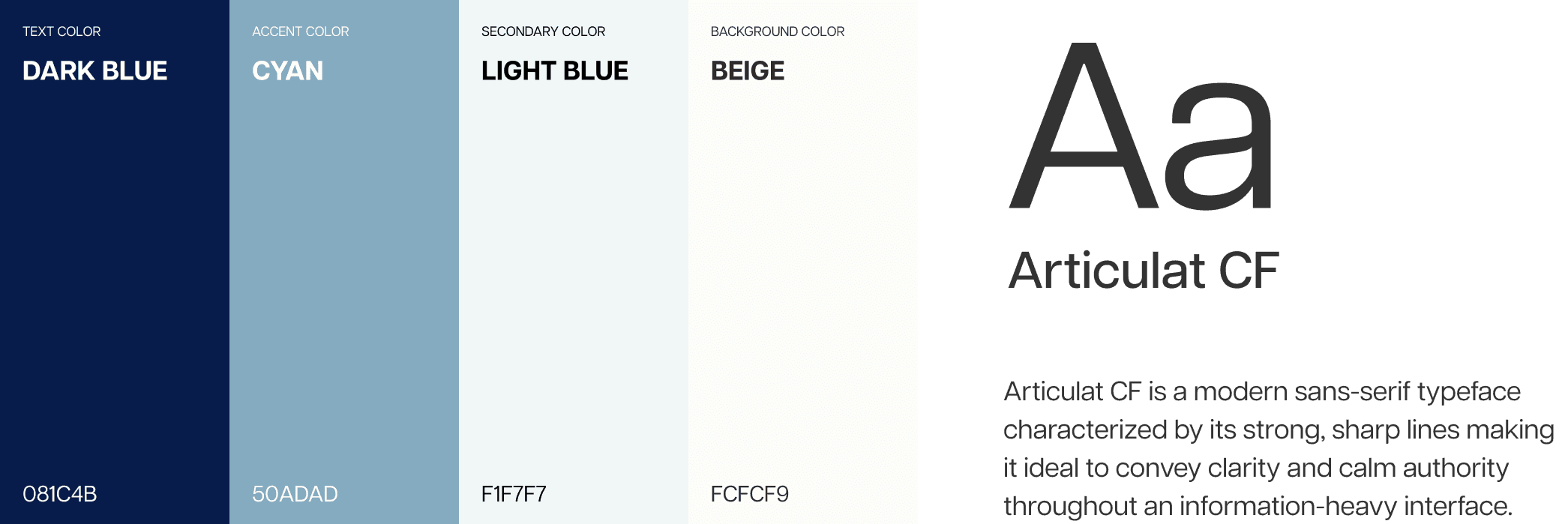
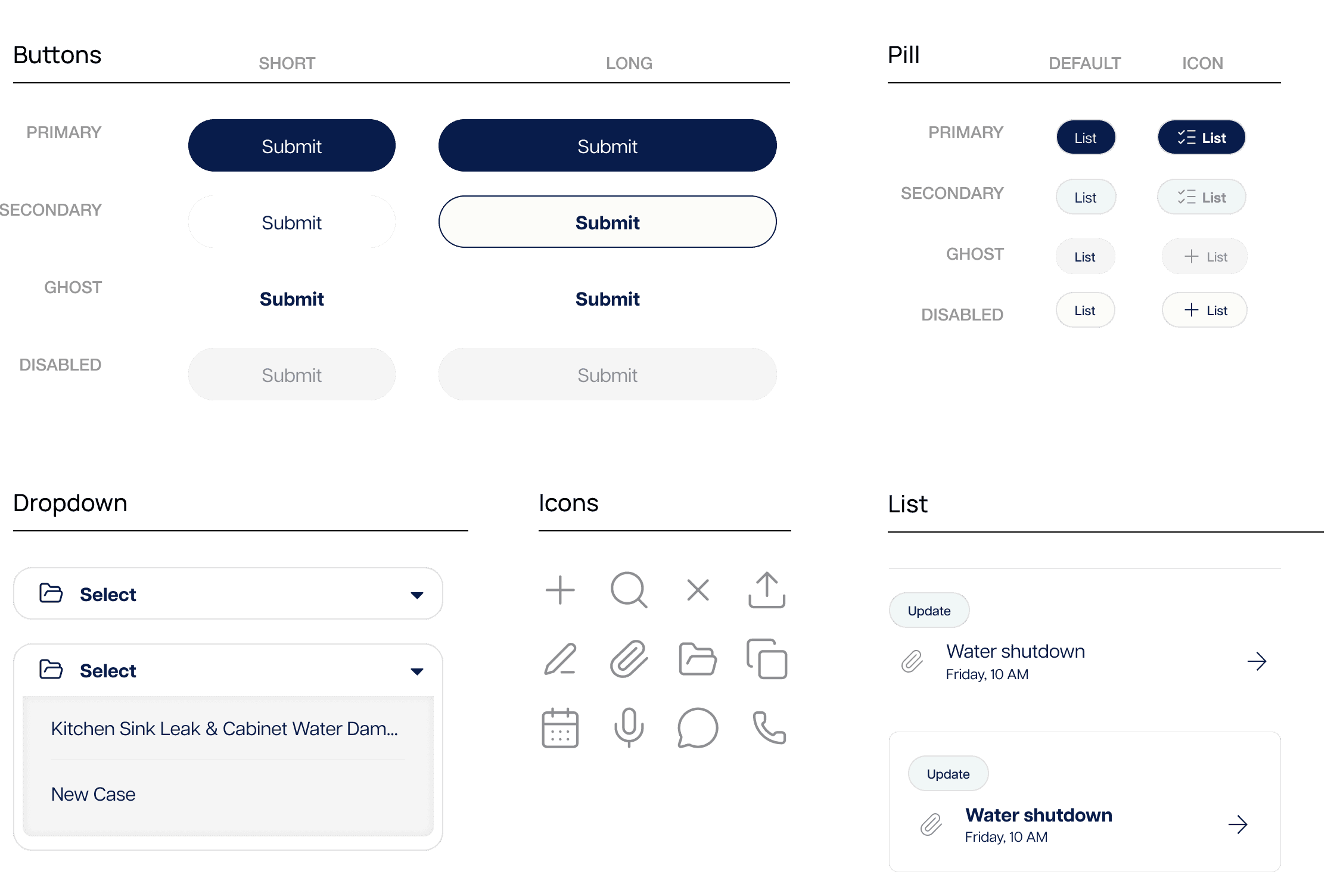
I drew inspiration from healthcare and renter’s insurance apps to establish visual trust, choosing a blue color palette, clear iconography, and a simple sans-serif typeface to create a calm, authoritative experience in high-stress moments. Because the product is information-heavy, I prioritized clarity through restrained color use, generous spacing, and modular components – so users can process complex housing details without feeling overwhelmed.
Style Guide
05. Testing & Iteration
Usability testing with three NYC renters surfaced several opportunities to improve focus and usability.
Uncovering Usability Flaws
Insight
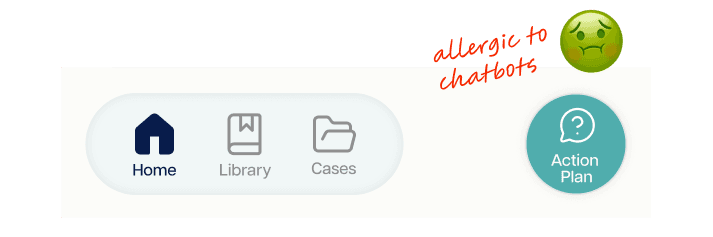
The design of my initial “Action” button looked too similar to a chatbot – creating an adverse reaction.
Solution
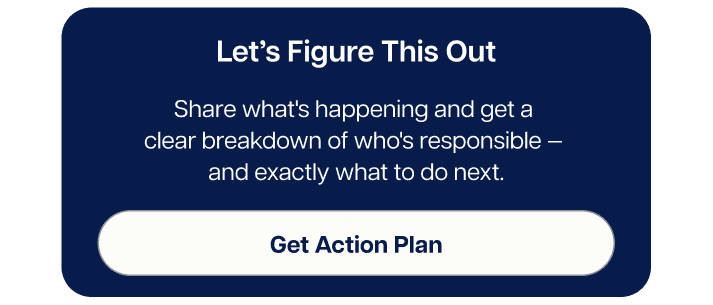
I placed the flow entry point in a card on the homepage to account for more context and descriptor copy of the button.
Reconsidering the Strategy
Moreover, testing revealed critical blind spots in the focus and structure of my product. There were too many features packed into the app that it was starting to lose focus.
What's stopping the user from seeking answers on ChatGPT?
Insight
Competing with generic housing resources diluted the product's value. I needed to make it more personal.
Solution
I refocused the features around the app’s strongest differentiator: helping renters document issues, access personalized housing context, and gain confidence when communicating with landlords.
In this iteration, I added more emphasis on the "tracking" function: ensuring users are able to quickly log updates about a particular issue to figure out next steps.

06. Impact & Reflections
One big key learning was the importance of Content Design and copywriting. From my insights, I gleaned that the renters' biggest pain point isn't just not knowing their rights — it's anxiety around what to say and how to act — so I prioritized designing for emotional reassurance alongside functional guidance. Next, I would invest in stronger copywriting, explore a community feature for shared learning, and validate a tiered model: offering a free personalized apartment hub with a paid “Action Plan” layer – so the product can scale while staying focused on empowering renters.